
How to Choose the Right Positioning Antenna: A Complete Buyer’s Guide
Choosing the right positioning antenna is essential for achieving reliable positioning accuracy, stable satellite signal reception, and consistent performance in navigation and tracking applications. Whether you are developing GNSS receivers, RTK surveying equipment, agricultural machinery, drones, or intelligent transportation systems, the right antenna can significantly affect the performance of your positioning solution.
With different frequency bands, satellite systems, antenna structures, and installation requirements available, selecting a suitable positioning antenna requires more than simply comparing product specifications. This guide explains the key factors to consider when choosing a positioning antenna for your application.
1. Identify the Required Frequency Bands
Frequency compatibility is one of the most important factors when selecting a positioning antenna. Different satellite navigation systems operate on different frequency bands, and the antenna must support the signals required by your receiver.
Common GNSS frequency bands include:
* GPS L1: 1575.42 MHz, widely used in navigation and positioning devices.
* GPS L2: 1227.60 MHz, used in advanced positioning applications.
* GPS L5: 1176.45 MHz, supporting modern high-performance positioning solutions.
* GLONASS: Uses multiple frequency channels around the L1 and L2 bands.
* BeiDou (BDS): Supports several frequency bands, including B1, B2, and B3.
* Galileo: Operates across multiple bands, including E1, E5, and E6.
A single-band GPS antenna may be sufficient for basic navigation, vehicle tracking, or consumer electronics. However, applications requiring higher positioning accuracy may benefit from a multi-band GNSS antenna that supports multiple satellite signals.
Before purchasing a positioning antenna, confirm the frequency bands supported by your receiver and the satellite systems required by your application. Selecting an antenna with incompatible frequency coverage can reduce reception performance or prevent the system from using certain signals.
2. Choose Between GPS, GNSS, and RTK Antennas
Positioning antennas are designed for different levels of performance and application requirements.
GPS antennas are commonly used in basic navigation, vehicle tracking, and location-based devices. They are suitable when the application mainly depends on GPS signals and does not require advanced multi-constellation capabilities.
GNSS antennas support one or more global navigation satellite systems, such as GPS, GLONASS, Galileo, and BeiDou. By receiving signals from multiple constellations, a suitable multi-system GNSS antenna can help a receiver access more satellites and improve positioning availability in challenging environments.
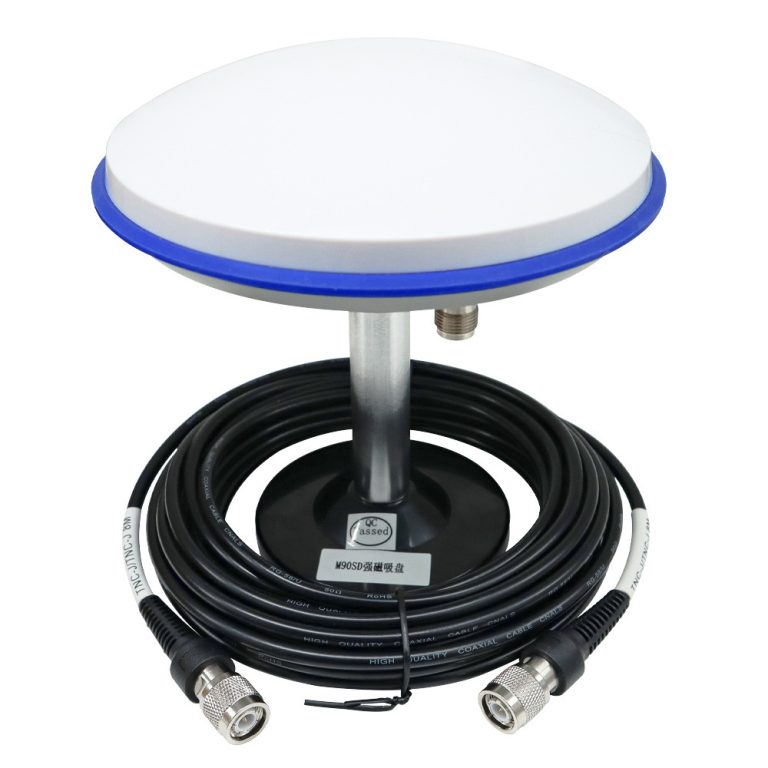
RTK antennas are used in real-time kinematic positioning systems that require high-precision measurements. Typical applications include land surveying, precision agriculture, construction machinery, and drone mapping. RTK performance depends on the complete positioning system, including the antenna, receiver, correction data, satellite visibility, and installation conditions.
For centimeter-level positioning applications, consider a multi-frequency GNSS antenna designed for carrier-phase measurements. Antenna phase-center characteristics, signal quality, and multipath suppression are especially important.
Remember that an RTK antenna alone cannot guarantee centimeter-level accuracy. The receiver and correction system must also support the required performance.
3. Match Positioning Accuracy to Your Application
Different applications have different positioning requirements. Choosing an antenna with suitable performance helps balance system reliability, size, and cost.
For example, vehicle tracking and fleet management may prioritize stable satellite reception and reliable location reporting. Agricultural machinery may require more precise positioning for automated guidance and repeatable field operations. Surveying and mapping systems generally demand higher accuracy and carefully controlled antenna performance.
When evaluating a positioning antenna, consider its gain, radiation pattern, polarization, axial ratio where applicable, and multipath rejection performance.
Antenna gain should not be evaluated in isolation. A higher gain specification does not automatically mean better positioning accuracy. The antenna must provide suitable coverage of the required satellite signals while maintaining good signal quality across the intended operating environment.
For high-precision applications, request detailed technical specifications and test data from the antenna manufacturer.
4. Select the Right Antenna Structure and Size
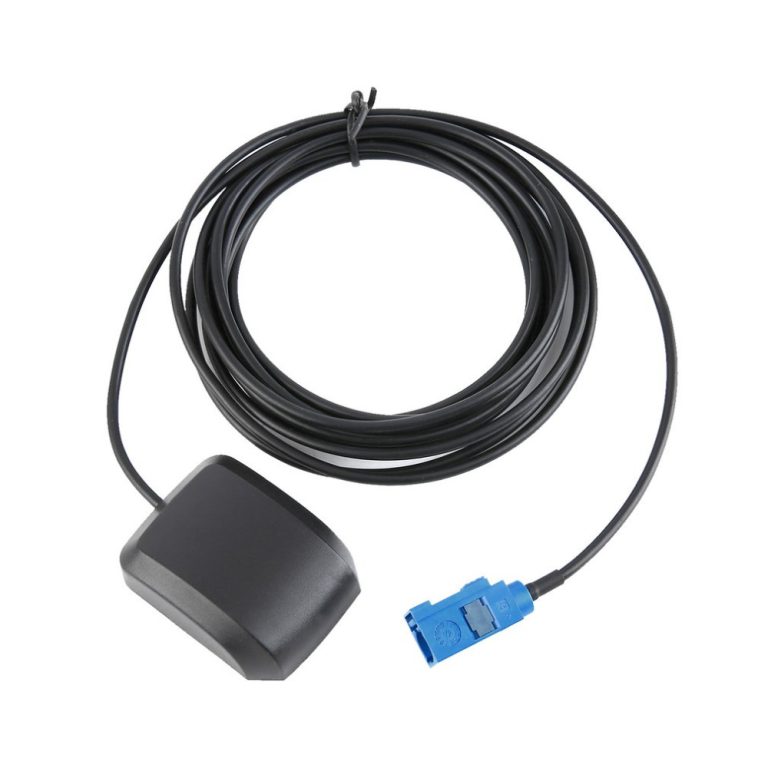
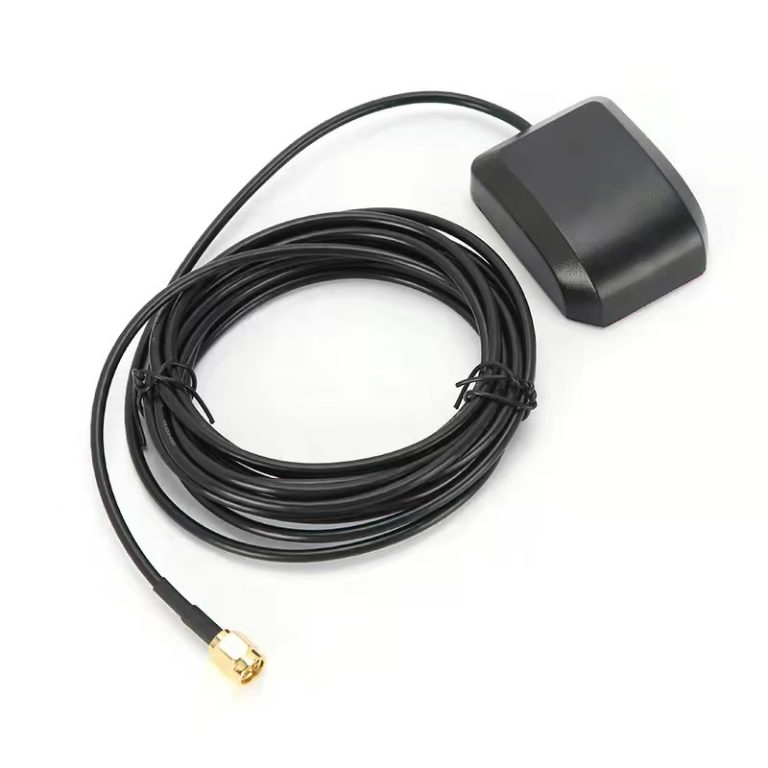
Positioning antennas are available in various structures, including patch antennas, ceramic antennas, external active antennas, and integrated GNSS antenna assemblies.
Patch antennas are widely used in GNSS positioning equipment because they can offer a compact profile and directional reception characteristics suitable for many applications.
Ceramic GNSS antennas are often selected for compact electronic devices, embedded positioning modules, and space-constrained products. Their suitability depends on the frequency bands, ground plane, and overall device design.
External positioning antennas are commonly installed on vehicles, agricultural equipment, surveying instruments, and outdoor equipment. They can provide greater flexibility in placement and may incorporate weather-resistant housings.
When choosing an antenna structure, consider the available installation space, required ground plane, mounting method, cable routing, connector type, and enclosure design.
Antenna dimensions alone do not determine performance. The antenna must be designed and tested for its actual installation conditions.
5. Consider the Installation Environment
The installation environment has a significant impact on positioning performance.
For outdoor applications, such as surveying, precision agriculture, and drone operations, the antenna may need protection against rain, dust, vibration, temperature changes, and mechanical impact.
For vehicle-mounted equipment, the antenna should be installed in a position with a clear view of the sky and sufficient separation from potential sources of electromagnetic interference. Metal surfaces, nearby antennas, electronic devices, and vehicle structures can affect antenna performance.
Indoor positioning and installations with partial satellite visibility present additional challenges. Buildings, trees, bridges, and surrounding structures can block satellite signals or cause multipath interference.
Before selecting a positioning antenna, evaluate the operating temperature, required ingress protection rating, mounting orientation, cable length, and expected exposure to environmental conditions.
For demanding applications, ask the manufacturer about environmental testing and installation recommendations.
6. Check Active or Passive Antenna Requirements
Positioning antennas can be active or passive.
A passive positioning antenna does not contain an integrated low-noise amplifier. Its performance depends on the antenna element, matching network, feed cable, and receiver input characteristics.
An active GNSS antenna typically integrates a low-noise amplifier (LNA) and may include additional filtering. This can help compensate for cable losses and improve signal delivery to the receiver, particularly when the antenna is installed at a distance from the positioning module.
However, active antennas require a compatible power supply, and their voltage, current consumption, connector pinout, and amplifier characteristics must match the receiver.
When choosing between active and passive antennas, confirm the receiver’s antenna interface, available bias voltage, cable length, and expected signal environment. An incompatible active antenna may cause poor performance or fail to operate correctly.
7. Evaluate Compatibility with Your Positioning System
A positioning antenna must work properly with the receiver and the rest of the system.
Before finalizing a purchase, verify the supported frequency bands, impedance, connector type, cable specifications, power requirements, and mechanical dimensions.
A 50-ohm interface is common in GNSS antenna systems, but the complete connection design should always be checked against the receiver manufacturer’s specifications.
For RTK applications, confirm that the antenna is suitable for the receiver’s supported multi-frequency signals and high-precision measurement requirements. For embedded products, evaluate the antenna together with the PCB, ground plane, enclosure, and nearby electronic components.
If you are developing a new device, testing the antenna in the actual product is more reliable than selecting it based on a standalone specification sheet.
8. Work with a Manufacturer That Supports Customization
Standard positioning antennas may not meet every project’s requirements. A manufacturer with antenna design, engineering, testing, and production capabilities can help develop a more suitable solution.
Customization may include frequency-band optimization, antenna dimensions, cable length, connector selection, housing design, mounting methods, and integration with the customer’s equipment.
When evaluating a positioning antenna supplier, review its technical support, testing capabilities, production consistency, quality-control procedures, and delivery capacity.
Request relevant test reports and sample units before moving to mass production. For customized projects, clearly define the technical requirements, acceptance criteria, expected production volume, and delivery schedule.
Working with an experienced antenna manufacturer can help reduce integration difficulties and improve the reliability of the final product.
Conclusion
Choosing the right positioning antenna requires careful consideration of frequency compatibility, positioning accuracy, antenna structure, installation environment, active or passive design, and receiver compatibility.
For basic navigation and tracking, a suitable GPS antenna may be sufficient. For applications involving multiple satellite systems, a multi-band GNSS antenna can offer greater flexibility. For surveying, precision agriculture, and drone mapping, an RTK-compatible antenna designed for high-precision measurements may be the better choice.
At SANMA Antenna, we focus on antenna design and manufacturing for different application requirements. By evaluating your operating environment, receiver specifications, and performance targets, our team can help you identify a suitable positioning antenna solution for your project.
Contact SANMA Antenna to discuss your positioning antenna requirements, request technical information, or explore customized antenna solutions for your equipment.